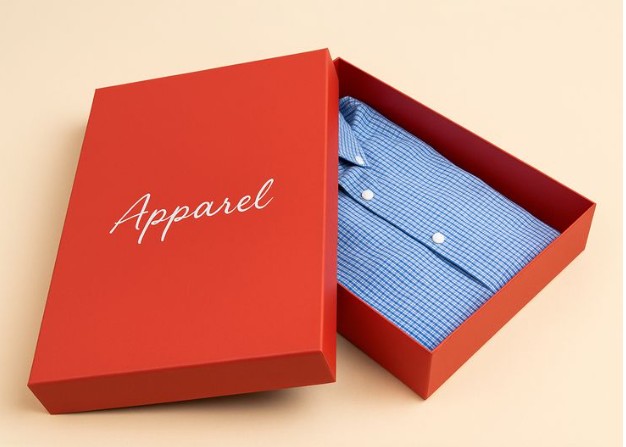
A hoodie doesn’t break when it’s dropped, so clothing brands often treat packaging as an afterthought. Then the returns start. A white shirt arrives with a grey smudge, or a box has split along the seam, or the customer opens a flat plastic bag that looks like it came from a clearance bin. The garment was fine. The packaging made it feel cheap.
Apparel is a funny category. Clothes are soft and light, but customers expect them to arrive clean, crease-free, and presented well, especially if they paid a premium price. Here’s how to choose boxes that handle shipping and still look good in someone’s hands.
Shipping and presentation are different jobs
An e-commerce box has to survive sorting belts, delivery vans, and rain on porches. A box for a premium product also has to feel like a reward when it opens. Few boxes do both well without some planning, so it helps to decide which job matters more for each product.
A basic cotton tee sold in volume mostly needs protection and low weight. A tailored shirt or a cashmere knit needs presentation as much as it needs protection, because unboxing is part of what the customer is paying for.
Many brands end up using two layers: a plain outer shipper for the journey, and a nicer inner box for the reveal. That costs more, but for high-priced items it’s often worth it.
Why Kraft is so popular for apparel
Kraft paperboard has become the default for a lot of clothing brands, and it’s easy to see why. It has a natural, earthy look that suits casual and sustainable labels. It takes a printed logo well, especially in one or two colours. And it’s widely recyclable, which matters to shoppers who check this before buying.
Wholesale Kraft apparel boxes with logo are a common choice for growing brands because they help keep per-unit costs down while building a recognisable look. A simple one-colour logo on brown kraft can look cleaner and more confident than a busy full-colour print, and it’s cheaper too.
Kraft does have a limit. If your brand is polished and luxury-focused, plain brown may not carry the message you want. In that case, a white or black rigid box, or a kraft box with a refined finish, may suit better. Kraft is a great choice, not the only one.
Size matters more than people think
Oversized boxes are one of the most common and costly mistakes. A box that’s too large means you’re paying to ship empty space, and the garment slides around and wrinkles. A box that’s too small crushes the fabric, making it hard to open without struggling.
Fold your product the way you’ll pack it, measure the folded stack, and add a small margin. Remember that thicker items like hoodies and denim need more room than a thin tee. If you sell the same garment in different sizes, you may need two or three box sizes rather than one.
Dimensional weight is worth checking, too. Couriers often charge by box size as much as by weight, so a slightly smaller box can reduce your shipping bill across thousands of orders.
Moisture is the quiet risk
Clothing absorbs moisture, and a parcel left on a wet doorstep can soak through a thin board. Water can ruin a pale garment, and no customer forgives that. Look for a stronger board, water-resistant coating, or a polybag inside the box for anything light-colored or delicate.
Poly mailers are cheaper, and for some products, they’re fine. But they offer less protection against crushing and don’t provide the same premium feel. Boxes cost more, but they tend to produce fewer returns for higher-priced items.
Think about returns
Apparel has a higher return rate than many other products, so packaging should account for it. A box that’s easy to reopen and reseal makes returns smoother, and some brands include a return label or a second adhesive strip. A reusable box also gives the customer a small reason to keep your brand around the house.
Ordering in bulk without regrets
Once you commit to a quantity, mistakes get expensive. Always ask for a physical sample, and test it with a real garment folded the way you’ll pack it. Check the closure, press the corners, and see whether the logo prints cleanly at the desired size. If you can, ship a sample to yourself or a friend and see how it arrives.
Ask about minimum order quantities, lead times, and whether you can reorder the exact same box later. Consistency between batches is easy to overlook until your second order looks slightly different from the first.
Final thoughts
Choosing apparel packaging is about matching the box to the product, the price, and the story you want to tell. A budget tee and a premium wool coat don’t need the same box, and treating them as if they do usually means overspending on one and underspending on the other.
Get the size right, protect against moisture and crushing, and spend your design budget on the few details people will actually notice. Customers rarely praise a good box out loud, but they notice a bad one immediately.