Preparing for a job interview can feel stressful, especially when you are unsure what questions to expect or how to present your skills. Whether you are a fresher looking for your first opportunity or an experienced professional planning a career change, the right preparation can make a real difference.
Technology has introduced smarter ways to practice, improve communication, and build confidence. An interview AI assistant can help you prepare for common interview questions, refine your answers, and identify areas where you need improvement. Similarly, live interview AI tools offer real-time assistance and guidance during certain interview settings, depending on the platform and its features.
But how do these tools work, and how can you use them effectively? Let’s explore their benefits, features, and practical uses.
What Is an Interview AI Assistant?
An interview AI assistant is a digital tool that uses artificial intelligence to support job seekers throughout the interview preparation process. It can help generate relevant questions, suggest answer structures, review responses, and provide feedback on your communication.
For example, if you are applying for a digital marketing position, the tool might generate questions about SEO, campaign performance, analytics, and teamwork. You can practice answering these questions and use the feedback to make your responses clearer and more relevant.
An AI assistant can also help you prepare answers using the STAR method: Situation, Task, Action, and Result. This approach is particularly useful for behavioral questions that ask you to describe previous experiences.
The goal is simple: prepare more effectively, communicate your strengths, and enter the interview with greater confidence.
How Does Live Interview AI Work?
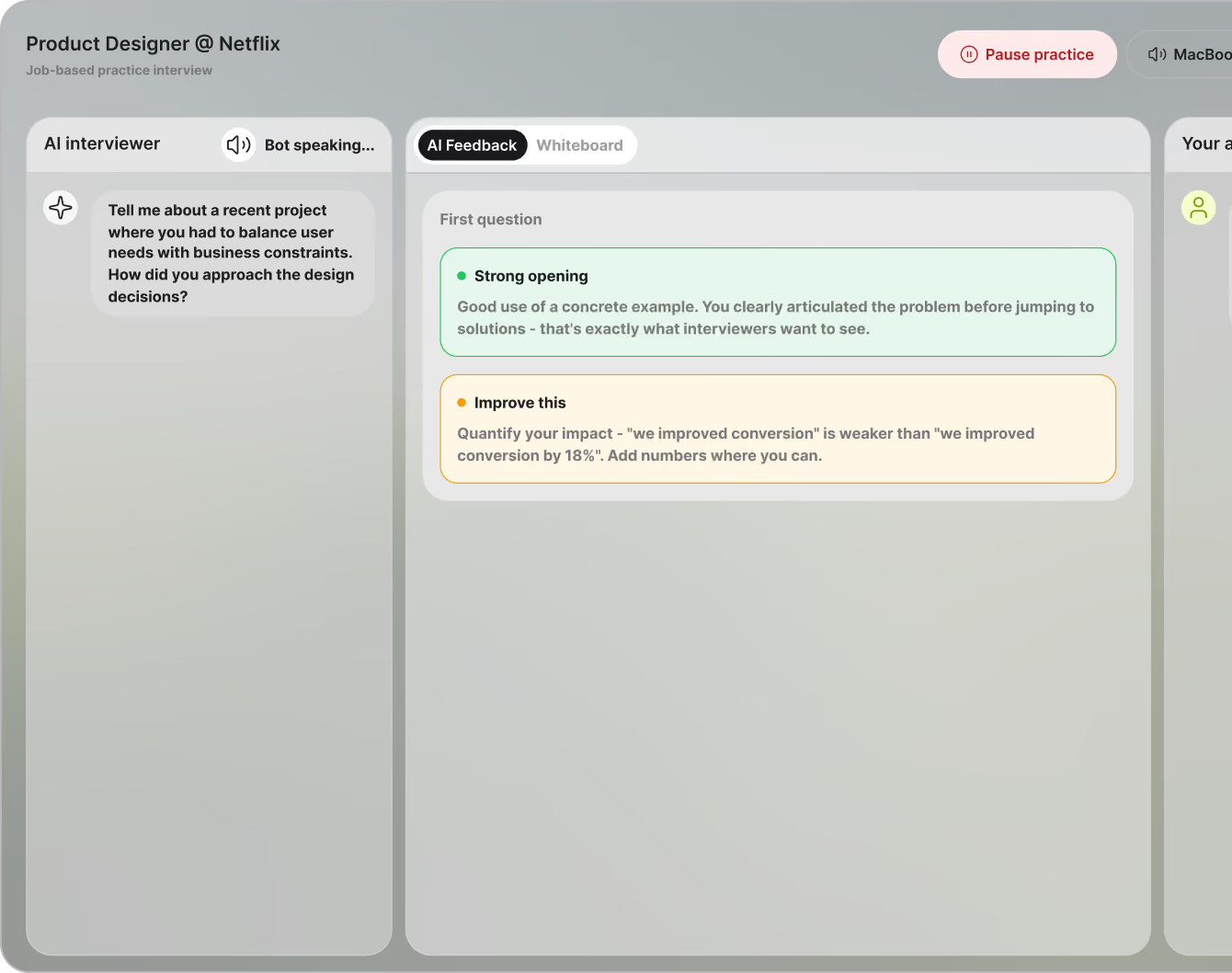
Live interview AI refers to tools designed to provide assistance during an interview or practice session. Depending on the software, features may include real-time transcription, question analysis, communication feedback, and suggested responses.
Some platforms focus on mock interviews, while others offer support during live video calls or technical interview exercises. Their capabilities and limitations vary, so it is important to check what a specific tool actually provides.
For example, during a practice interview, an AI tool might identify that your answer is too lengthy or that you have not explained the results of your work. This feedback can help you improve before speaking with a real recruiter.
However, AI-generated suggestions are not always accurate or suitable for every situation. You should review the information carefully and make sure your responses reflect your genuine experience.
Key Benefits of Using AI for Interview Preparation
1. Practice at Your Own Pace
One major advantage is flexibility. You can practice whenever you have time without coordinating schedules with a friend, mentor, or career coach.
An interview AI assistant can generate questions for different roles and experience levels, helping you prepare for interviews that match your career goals.
2. Improve Your Answers
Sometimes, candidates have excellent skills but struggle to explain them clearly. AI feedback can help you organize your thoughts, remove unnecessary details, and highlight measurable achievements.
Instead of saying, “I helped improve sales,” you could explain how you contributed to a campaign that increased qualified leads by a specific percentage, provided that figure accurately reflects your experience.
3. Build Confidence
Repeated practice makes unfamiliar questions easier to handle. You can rehearse your introduction, practice explaining employment gaps, and prepare for questions about strengths and weaknesses.
Over time, this preparation can help you feel more comfortable expressing yourself.
4. Prepare for Technical Interviews
Candidates applying for software development, data analysis, finance, and other specialized roles can use AI tools to practice technical questions and explain their problem-solving process.
For coding interviews, some tools may offer practice problems, hints, or explanations. You should still solve problems independently to develop the skills employers expect.
5. Save Preparation Time
Rather than searching through countless websites, you can use AI to create a focused preparation plan based on a job description, required skills, and your experience.
This makes it easier to prioritize relevant topics and spend more time practicing.
How to Use an Interview AI Assistant Effectively
Getting useful results depends on how you use the tool. Follow these practical steps.
Step 1: Share the job description. Provide the role requirements so the AI can suggest relevant questions and identify important skills.
Step 2: Practice common questions. Start with questions such as “Tell me about yourself,” “Why should we hire you?” and “Describe a challenging situation you handled.”
Step 3: Answer in your own words. Avoid memorizing entire responses. Natural answers usually sound more authentic and allow you to adapt to follow-up questions.
Step 4: Review the feedback. Look for recurring problems, such as vague examples, weak explanations, or answers that lack structure.
Step 5: Practice again. Use the feedback to improve your responses and measure your progress over several sessions.
You can also ask the tool to conduct a mock interview one question at a time. This creates a more realistic practice experience.
Is Live Interview AI Right for Everyone?
Although live interview AI can be useful, it is not a perfect solution for every candidate.
Some tools are better suited to preparation, while others provide real-time features. Certain employers may also restrict the use of AI assistance during assessments or interviews.
Before using any tool during an actual interview, review the employer’s rules and respect their expectations. Unauthorized assistance may violate interview policies and could affect your candidacy.
Privacy is another important consideration. Avoid uploading confidential company documents, sensitive personal information, or proprietary interview materials unless you understand how the platform handles your data.
Most importantly, AI should support your preparation rather than replace your knowledge, judgment, or communication skills.
Tips for Getting Better Results From AI Interview Tools
To make your practice sessions more productive, keep these suggestions in mind:
- Be specific: Mention the job title, industry, experience level, and skills you want to practice.
- Use real examples: Base your answers on genuine achievements rather than invented experiences.
- Ask for honest feedback: Request suggestions about clarity, relevance, structure, and confidence.
- Practice speaking aloud: Written answers alone cannot fully prepare you for a spoken interview.
- Verify technical information: Check AI-generated explanations against reliable learning resources.
- Stay authentic: Use suggestions to improve your answers without losing your natural communication style.
Remember that recruiters assess more than the quality of your answers. They may also consider your problem-solving ability, enthusiasm, collaboration skills, and suitability for the role.
Conclusion
Preparing for a job interview does not have to be overwhelming. With the right approach, AI tools can help you practice relevant questions, organize your thoughts, improve your answers, and identify weaknesses before the actual interview.
An interview AI assistant is particularly valuable for structured preparation, while live interview AI may offer additional support depending on the platform and the interview setting.
The best results come from combining technology with genuine preparation. Learn about the company, understand the role, practice real examples, and develop the confidence to explain your experience naturally.
AI can help you prepare more efficiently, but your skills, honesty, and ability to connect with the interviewer remain essential.
Frequently Asked Questions (FAQs)
1. What is an interview AI assistant?
An interview AI assistant is a tool that uses artificial intelligence to help candidates prepare for job interviews through practice questions, answer suggestions, mock interviews, and personalized feedback.
2. What is live interview AI?
Live interview AI refers to software that can provide real-time interview support, such as transcription, question analysis, or suggested responses. Features differ by platform, and users should follow the employer’s interview policies.
3. Can AI help me answer interview questions?
Yes. AI can help you organize your thoughts, develop answer structures, and practice responses to common or role-specific questions. You should personalize every answer to reflect your actual experience.
4. Is an interview AI assistant useful for freshers?
Yes. Freshers can use these tools to practice introductions, explain academic projects, prepare for HR questions, and improve communication before attending their first job interview.
5. Should I use live interview AI during a real job interview?
Only if the employer permits it. Check the interview rules before using real-time assistance. When AI support is not allowed, use it beforehand for preparation and practice instead.