



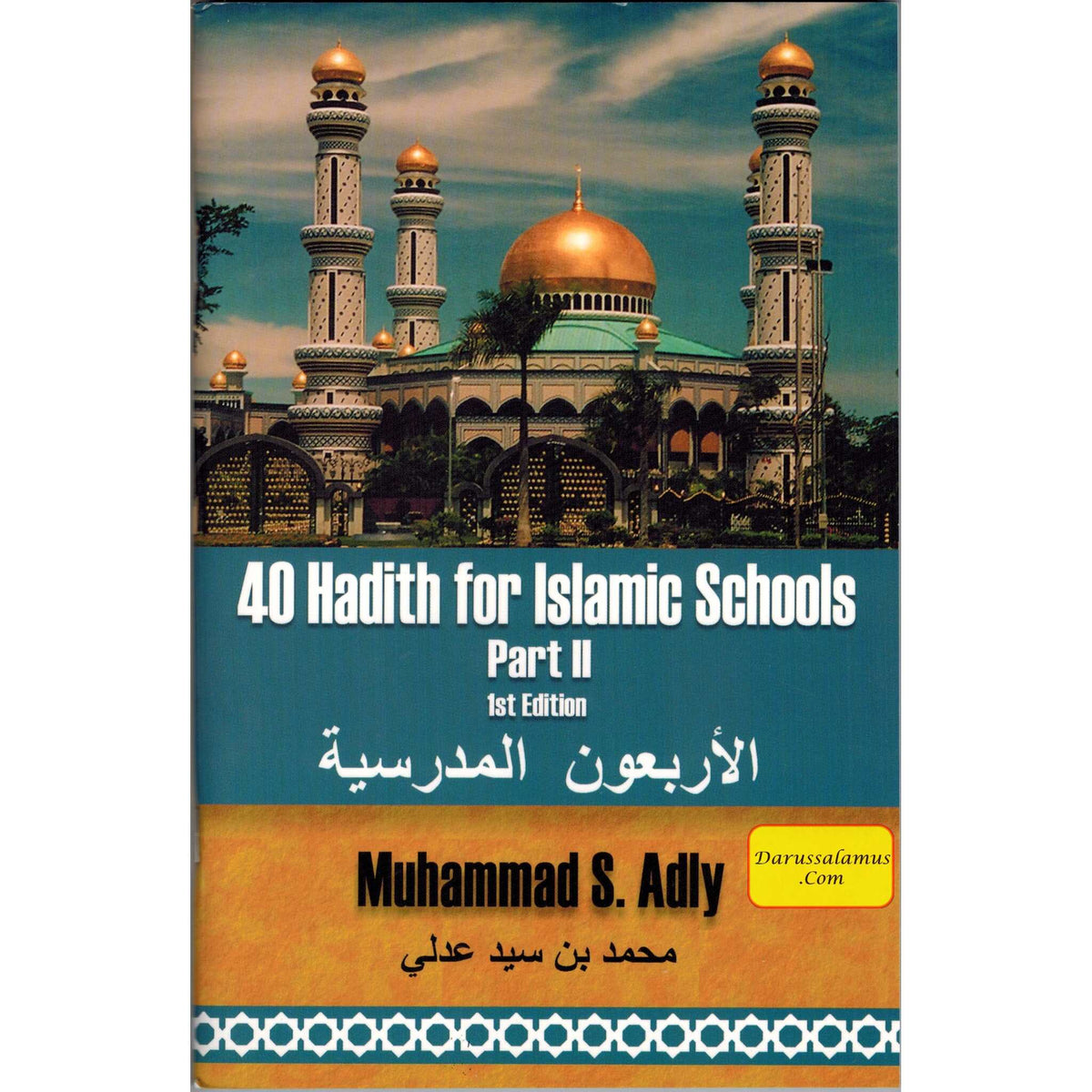
40 Hadith for Islamic Schools Part 2′ by Muhammad S. Adly: An Educational and Invaluable Treasure In the context of Islamic learning, there is no greater treasure than the knowledge left behind by the prophet of God, Prophet Muhammad (peace be upon him). “40 Hadith for Islamic Schools Part 2” by Muhammad S. Adly is a useful addition to such educational heritage. This is a book of hadith compiled precisely for teaching in Islamic schools, to be learned there by important moral and ethical lessons. In this blog post, we shall discuss the arrangement of the book, some of its most prominent themes, and how the book could impact young minds.
Understanding the Role of Hadith in Islamic Education
Hadith, for instance, is the recorded sayings and actions of the Prophet Muhammad. It is an essential component of Islamic education that teaches individuals how to live with various conditions in life, ethics, morality, and spirituality. Therefore, hadith in the curriculum is urgently needed to install precious lessons in the minds of the student.
In “40 Hadith for Islamic Schools Part 2,” Muhammad S. Adly made an effort to make the teachings relevant and real to the learners. This approach honed students’ understanding of Islam and deeply prepared them for academic and personal growth.
Thoughtful Compilation: Structure and Themes
This book is designed to present forty selected hadith, each with associated explanations and reflections. These hadith were chosen for relevance in daily life among the young students, ranging from kindness and honesty to responsibility.
The explanations of Adly are full of meanings and illustrations to explain the principles of each hadith for the students. This thoughtful work calls for active participation whereby students will connect the teachings with their lives.
Core Values Focus: Meaning of Hadith on Morals and Ethics
One of the most striking characteristics of “40 Hadith for Islamic Schools Part 2” is the general thrust to uphold essential values of Islam. Every hadith conveys basic moral lessons that the students would eventually adopt. Some such themes that are constantly suggested in the text are sympathy or compassion and respect for others.
These students, therefore, should emulate these values that can promote their self-growth and interaction with others. It’s from such knowledge that young Muslims can establish a robust moral standing.
The Use of Context: The Pertinence of Hadith
The method used by Adly stresses the importance of setting up context while teaching hadith. He usually presents a background that contextualizes every saying within its historical and cultural framework. Such contexts make the teachings all the more significant for students to relate to and apply into their life.
For example, one’s knowledge about the situation under which a particular hadith was narrated enlightens the issue nowadays. It also poses a challenge to critical thinking, challenging students to raise questions and seek deeper understanding.
Interactive Techniques to Engage with the Material: Interactive Techniques for Learning
To help in a more meaningful learning process, “40 Hadith for Islamic Schools Part 2” integrates some interactive techniques. Interactive techniques involve the students in the material. Discussion prompts, reflective questions, and activities based on each hadith evolve a lively classroom environment.
By discussing what they think or learn from one another, discussions stimulate learning among the students and provide them an opportunity to voice their opinions. This contact with one another not only fosters their learning but also facilitates the development of communication skills that are so crucial.
Encouraging Personal Reflection: Self-Assessment
Self-assessment is a part of personal growth. Adly challenges the student to think about what lesson he or she learned from every hadith and how it might help him or her in life. This fosters self-assessment and personal responsibility.
The learning of the students would include the perception of his actions and motives in alignment with the guidance. Reflection for changes in behavior and thinking can strengthen the values of Islam.
Roles of Teachers: Creating Learning Environments
Instructors would play a great role in delivering the program “40 Hadith for Islamic Schools Part 2” effectively. They would assist also guide the students to further probe what they learned in class. This would be facilitated in an open also conducive learning environment where the educator had created love for knowledge.
Moreover, with such a lesson, teachers can make the lesson more relevant also worthwhile as they make their relationship to actual life experiences. Such relevance will make students have higher learning engagement because they will see aspects of practical application in their faith.
Supportive parental involvement: Bridging school and home
The teachings of “40 Hadith for Islamic Schools Part 2” extend beyond the school walls. Parents are encouraged to convey such information to their children. Such congregative efforts between school also home provide additional momentum to these teachings.
Parents can be involved to create an effective network for the moral development of a student, also thus guides are available under whose influence children can be imbued with Islamic values. This collaboration fosters accountability in a child also fosters Islamic values in a child’s life.
Effects of Hadith in Character Development: Guiding Future Leaders
The lessons of character that might be drawn from this hadith make up a great portion of what can be learned from this book. It is there, no doubt, where the student will internalize these lessons in becoming responsible also ethical persons for the future leaders within the Muslim people.
Adly stresses core values like integrity also compassion that aptly equip students to face the challenges of modern times. The ability of the book to strengthen personality, envisaging a human being with a difference, contributes to making the whole process well-rounded individuals who will mold society in an effective manner.
Building a Community of Learning: The Role of Study Circles
In the study circles, ample learning outside the classroom is found in the elaboration of the teaching coming from “40 Hadith for Islamic Schools Part 2.” Indeed, these circles provide the students an avenue to meet and interact to collectively deliberate on the hadith.
Group discussions allow learners to share their thought, ideas, or experiences. This group learning brings fraternity and sense of belongingness and makes people believe that learning is collective endeavor.
Conclusion: A Precious Resource for Islamic Education
In conclusion, 40 Hadith for Islamic Schools Part 2, by Muhammad S. Adly, has been the most invaluable resource for both educators and students. Thoughtful compilation of hadith with interesting teaching methods is an effective tool for instilling Islamic values.
Through the context, reflection, and interaction, Adly contributes a holistic approach to teaching hadith to students. This book is an enrichment to their educational experiences and adds to their moral and ethical developments as young Muslims.
Students, then, are expected to become conscious and active elements imbued with the values of Islam because of their interaction with the teachings of the prophet. This way, they contribute to a brighter future both for their community and for the world.
Read more: 40 Hadith with CD on the Virtues of Laa Ilaaha Illa Allah By Shaykh Muhammad